Tampilkan postingan dengan label Pasta. Tampilkan semua postingan

Creole Crab Noodles – Mardi Gras Fusion

I’m calling this Creole crab noodles recipe an “experiment,” but it didn’t really feel like one, since I was sure it was going to come out really well, which it did. Crab, and its old friends, the Holy Trinity, are a classic combo, and so it was no surprise they worked so well in an Asian-style, rice noodle dish.

If you can get fresh crab meat, by all means use that, but if not, pretty much every large grocery chain carries pasteurized crab in 8-ounce plastic tubs, which works perfectly fine for this. And if shellfish isn’t your thing, I’ve got some great news. This exact same dish can be made with literally any other other meat and/or vegetable.

You can also do this with your favorite pasta, but like I said in the video, there are few foods as addictive, and fun to eat as rice noodles, so I’d advise against it. Besides, you can finally have that gluten-free friend of yours over to make up for all those pizza-night invites. So, whether you make this for Mardi Gras or not, I really do hope you give it a try soon. Enjoy!


Ingredients for 2 large portions:
8 ounces crab meat
2 tablespoons vegetable oil
1/3 cup finely diced green onions, plus more for garnish
1/3 cup finely diced celery
1/3 cup finely diced hot and/or sweet peppers
8 ounces rice noodles, soaked, drained

For the sauce:
3 cloves crushed garlic
3 tablespoons ketchup
1/4 cup seasoned rice vinegar
1 tablespoon soy sauce
1 tablespoon fish sauce
1 teaspoon paprika
1 teaspoon cumin
1/2 teaspoon cayenne

How to Make Spätzle (aka Spaetzle) – Little Sparrows for Big Meat

Apparently “Spätzle” translates to “little sparrows” in German, which makes a lot of sense when you consider their shape. What doesn’t make sense is why these micro-dumplings are also called “spaetzle.” Is it an alternate spelling? A different recipe? I’m hoping maybe some of our German foodwishers can clear this up.

Since my favorite German restaurant calls this stuff spätzle, that’s what I went with, and they are as easy to make, as they are hard to correctly pronounce. You only need a few ingredients, all of which you generally have on hand at all times, and they take just minutes to cook.

Once boiled, you can toss in butter like I did, or sauce them any way you’d sauce similarly shaped pasta. While wonderful served as-is, they make the perfect side dish to any large hunk of slowly braised meat. I paired mine with a pork shoulder stewed in hard cider, and it was amazing.

I thought I’d posted a video for that, but it was actually a cider-braised pork cheeks recipe I was thinking of, which would work perfectly here. So, I may have to do a braised pork shoulder after all. In the meantime, I’m sure you’ll have little trouble figuring out what to serve yours with, and I really do hope you give this Spätzle recipe a try soon. Enjoy!


Makes 2 portions:
1/2 cup all-purpose flour, plus more to adjust
1 large egg
1/2 teaspoon kosher salt
pinch of cayenne
1 tablespoon cream fraiche, sour cream, or yogurt
3 tablespoons milk

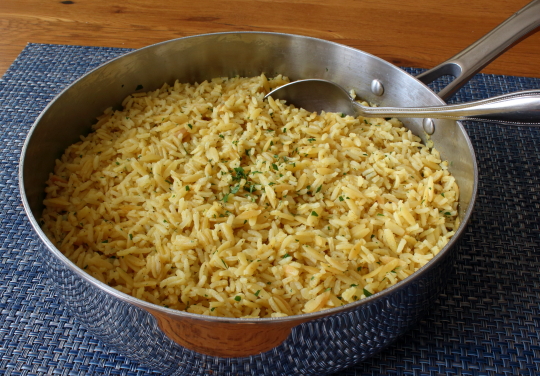
Rice-Ah-Roni – The San Francisco Treat?

While it’s true this great side dish was invented in The City, to call it “the San Francisco treat” is a bit of a stretch. Like I said in the video, the next time I see this served around here, will be the first. I’d say a Mission-style burrito is the real San Francisco treat. Which reminds me, I seriously need to do that video.

Regardless, if you like the stuff from the box, I think you’ll enjoy this, although without all that MSG, it will not be quite as savory. I guess we’re sacrificing a little less flavor for something that’s more healthful, at least according to me. I’ve stopped trying to convince people that eating lots of MSG is not a great idea; but as far as how it impacts one’s diet and carb cravings, I think the research is clear. In fact, forget the research, and just ask yourself why so many people are addicted to fast food.

It’s certainly not the quality, or appearance. Having said that, if you do want to get closer to the original, simply use a cheap, powdered chicken base to make your broth. That stuff is loaded with MSG, among other things, and may be preferable to many of you drive-thru junkies, he said judgmentally. Either way, I really do hope you give this a try soon. Enjoy!


Ingredients
3 tablespoons unsalted butter
1/2 cup finely diced onions
2/3 cup orzo pasta, or spaghetti broken into small pieces
1 1/3 cup white long grain rice
3 cups high-quality chicken broth
Spice blend:
1 1/2 teaspoon kosher salt, plus more if needed
1/8 teaspoon freshly ground black pepper
1/8 teaspoon coriander
1/8 teaspoon mustard powder
1/8 teaspoon celery salt
1/8 teaspoon paprika
1/8 teaspoon turmeric
1/8 teaspoon cayenne
1 tablespoon freshly chopped parsley

Rigatoni al Segreto – Dinner and a Movie

This Rigatoni al Segreto recipe was the most closely guarded secret at Gino’s, one of New York City’s most famous Italian restaurants. It was as legendary, as their signature zebra-print wallpaper, and it won awards as the best red sauce in town. 

While there were rumors that the secret ingredient was butter, no one really knew for sure. Once the restaurant closed in 2010, the recipe got out, and indeed, the butter legend was confirmed. Having never been there, I was excited to try it, but there was a big problem. Actually, a small problem. The recipe called for just a half-tablespoon of butter. Regulars knew this couldn’t be right, and so the recipe remained a mystery. Was it a typo? Was the old chef just trolling people?

We may never have known; had it not been for a documentary called, “The Missing Ingredient.” It’s a great film, but despite the name, it’s not about the butter. However, there’s a scene near the end, where the old chef makes this pasta for the filmmaker, and it shows how much butter goes in.

He made a much larger amount than the published version, but I concluded that it was a typo, and should’ve been half a stick of butter. So, not only am I recommending that you make this delicious sauce, but I also really hope you checkout the movie soon (it’s on Netflix). Enjoy!


Ingredients for four small or two large portions:
4 tablespoons olive oil
1 cup diced onion
1 teaspoon salt, plus more to taste
2 or 3 cloves crushed garlic
a pinch of red pepper flakes (not in original recipe)
1 can (28 oz) San Marzano tomatoes, blended smooth
1/2 cup water to rinse out the can of tomatoes
Small handful of basil leaves, left whole or sliced just before adding
1 cup freshly grated Parmigiano-Reggiano (about 1.5 oz by weight), plus more to top
4 tablespoons butter, cubed
*8 ounces dry rigatoni

* This recipe probably makes enough sauce to coat 12 oz of pasta, but I like lots of sauce.

Spicy Chicken Noodles – It’s The Rice That Makes It Nice

The only downside to this beautiful, spicy chicken noodles recipe is that I’m now going to get even more requests for Pad Thai that I usually do. Which is understandable, since no matter what recipe they’re used in, rice noodles are a proven crowd-pleaser.

By the way, I’ll post a recipe for pad Thai just as soon as my version comes out at least as well as the worst restaurant example in town. I’m not quite there yet. In the meantime, we can all practice our rice noodle soaking technique. As I mentioned, check the package of noodles you buy, as the time will vary depending on the size of the noodle.

I think this dish is perfect for using up leftover chicken, assuming it wasn’t horribly overcooked in the first place. If you did want to use raw chicken, go ahead and chop it up, and stir-fry it for a minute or two, before adding your vegetables. Either way, I really hope you give this spicy chicken noodles recipe a try soon. Enjoy!


Ingredients for 2 large or 4 small portions:
8 ounces dry rice noodles, soaked in 6 cups of boiling, lightly salted water (drain and rinse before using)
8 ounces cooked chicken breast, torn
1 tablespoon sesame oil
For the sauce:
3 tablespoons hoisin
1 tablespoon soy sauce, plus more to taste
1 tablespoon ketchup
1 tablespoon brown sugar
1 or 2 tablespoons Sriracha, or other hot sauce
1 teaspoon hot chili flakes
1/4 cup seasoned rice vinegar
1/2 cup chicken broth
For the vegetables:
1 large carrot, finely sliced or shredded
1 red bell pepper, thinly sliced
2 jalapeno peppers, thinly sliced
2 cups finely sliced green cabbage
1/2 cup chopped green onions
3 cloves garlic, finely crushed
1/2 cup freshly chopped cilantro

Proper Pesto

There are lots of recipes people claim taste better if made by hand, but there’s no easier case to prove than pesto. That the name means, “to crush,” should tell you something, and while this method does take considerably more physical effort, when you taste this you’ll forget every pestle-pounding minute.

The intensity of the flavors is beyond compare, and as if by some kind of magic, this gorgeous spread develops an addictive spiciness. You can taste each ingredient, and yet when smashed together, new and wonderful flavors are released. If you’re in the market, I recommend the marble mortar seen herein, as long as the inside has some texture to it. If it seems smooth and glassy, keep looking.

Of course, you can play around with the ratios of the five ingredients, and easily adjust this to your tastes, but no matter how they’re combined, taking the time to crush them by hand is well worth the effort. I hope you give this fresh basil pesto a try soon. Enjoy!


4 cloves garlic peeled
1/4 teaspoon kosher salt
1 large bunch basil (about 4-5 ounces)
3 tablespoons pine nuts
2 ounces Parmigiano-Reggiano, grated on microplace (about 1 1/2 cups unpacked)
1/2 cup mild extra virgin olive oil

Calamari Marinara – Would You Like That In 45 Seconds or 45 Minutes?

Calamari is affordable, delicious, and sustainable, yet many cooks shy away from it, since it has a reputation for being tricky to work with. I should’ve said “unfair reputation,” because while it’s true calamari can end up with a rubbery texture if overcooked, there’s a very simple way to avoid this… by really overcooking it.

When it comes to calamari, it needs to be cooked in either 45 seconds, or 45 minutes, and nothing in between. If you sear it in a pan, or poach it in a sauce for a very brief time, you should get something nice and tender. However, after just a few extra minutes, the squid gets chewy.

Unfortunately, this is how most calamari is served, since it is easy to overcook, even for a professional. But, if we gently simmer for about 45-minutes total, something amazing happens. The calamari loses that rubbery texture, and becomes tender once again.

I also think it takes on more a meaty flavor, which I love, especially when using this to sauce pasta. So, if you’ve wanted to try cooking calamari, but were afraid of over-cooking it, I really hope you give this easy sauce a try soon. Enjoy!


Ingredients for 4 portions:
2 tablespoons olive oil
1  yellow onion, sliced thin
4 garlic cloves, crushed
1 anchovy fillet
1/2 teaspoon red pepper flakes
1 Serrano chili pepper sliced thin
1/2 teaspoons salt, plus more if needed
1/2 cup drinkable white wine
1 cup clam juice
6 cups crushed or puréed Italian plum tomatoes
1/2 teaspoon dried oregano
2 pounds frozen calamari tubes and tentacles, thawed, sliced into half-inch pieces
1/4 cup freshly chopped Italian parsley
freshly grated Parmigiano-Reggiano, optional
1 pound dry pasta

Roman-Style Gnocchi – No Potatoes Were Harmed During the Making of This Video

Gnocchi alla Romana are as delicious, as they are virtually unknown. I feel like I’ve eaten a fair amount of Italian food, and I’ve been to Rome, but it wasn’t until late in life that I discovered these wonderful, baked semolina dumplings.

Above and beyond their exquisite texture, and great taste, I love their versatility. They’re a world-class side dish as is, but can be paired with your favorite pasta sauce, and served as an appetizer, or entrée. Rave reviews should come your way; along with lots of “But, why are these called gnocchi, again?”

For a great winter twist, you can place some sage leaves in between the gnocchi before baking them, and they’d be perfect at any holiday feast. In fact, now I’m upset I didn’t do that this time. I’m going to have to make another batch. Anyway, I really do hope you give these a try soon. Enjoy!


Ingredients for about 16 Roman-Style Gnocchi:
Note: I used a 2.75-inch cutter
3 cups milk
1 teaspoon kosher salt, or to taste
1 1/4 cup semolina
1 cup freshly grated Parmigiano-Reggiano cheese (only about 1.25 ounces by weight, but if you grate it on a microplane, it will easily fill a cup)
2 large egg yolks
3 tablespoons cold unsalted butter, cut into small cubes
3 tablespoons melted butter for the top
more grated Parmigiano-Reggiano for the top

Lamb Suthriyan (Indian Pasta)

Suthriyan is a traditional muslim pasta dish made by the muslim community in Chennai. It is mostly made with lamb or shrimp and coconut milk. Whenever I make it here in Canada, it brings back to me vivid memories of my past of how we enjoyed eating Suthriyan at our family get togethers and picnics,  how we would all sit together around the pot of Suthriyan, heap up our plates and eat to our heart's content till we wiped off  the pot all clean. Oh, so delicious indeed were the lip smacking Suthriyan with the chunks of lamb melting in your mouth!


Suthriyan (indian pasta) are made with white flour and are available in the stores in Chennai. There is another kind of suthriyan made with chappati flour (finely ground wheat flour) which are made at home by rolling out flat breads, cutting them into diamond shapes and then drying them on a piece of clean cloth spread on the table or in the sun. These are a bit chewy and not as soft as the white suthriyan which melt in the mouth. 

Suthriyan should be first cooked in boiling water to which coconut milk is added before mixing in the gravy. This cooking technique not only enhances their flavour but also keeps them separate (does not make them stick  together in clusters) and helps them cook faster as well. If you add them directly to the gravy to cook them, they will not cook evenly and you will be left with some cooked and some half cooked ones. So it is sometimes better not to take short cuts.

The cut of lamb that you choose is also important. It is preferable to add a few pieces of lamb breast along with the lamb shoulder with the bones for this recipe. The excessive fat on the top should be trimmed off leaving the thick wedge of edible fat (which is hard and doesn't peel off) under which is the layer of soft meat on the bone and it should be cut into single short rib pieces. The soft and succulent shoulder pieces blend with the softness of the suthriyan pasta and melt in the mouth. The lamb breast is also soft and chewy and it adds more meaty flavor and taste. So delicious and yummy!

 Here's the recipe.

Ingredients:
Lamb Shoulder  1.5 kg (Shoulder meat plus some pieces of lamb breast)
Suthriyan - 1 kg
Vegetable oil - 1 cup
Onions - 5 large (1lb) thinly sliced
Tomatoes - 4 large (400gm) quartered.
Mint leaves - 1/4 cup
Cilantro - 1/2 cup
Green chillies - 6 whole
Fresh Lemon - 1/2
Ginger garlic paste - 200 gm
Yoghurt - 1 cup (3.5%) or home made from whole milk. 
Coconut milk - 2 cans ("Real Thai Coconut milk" or extract milk from 1 fresh coconut).
2 litres of Water for boiling Suthriyan
Cloves - 10
Green cardamom - 10
Cinnamon sticks - 2
Turmeric powder - 1 tsp
Red chilly powder - 1/2 tsp (optional)
Salt to taste.
1 small sliced onion to sauté for garnish
Ghee (Clarified butter) - 2 tsp

1. Remove the skin, trim the fat, clean and wash the lamb pieces well and set aside.

2. In a pot heat the vegetable oil, add the whole spices - cloves, cardamom and cinnamon sticks to the oil followed after a few seconds by the sliced onions. Fry them on medium heat.

3. When the onions turn golden brown add the ginger garlic paste, turmeric and red chilly powders.
Mix the spices then add the lamb pieces and roast them in the masala till they turn opaque and harden a bit.

4. Now add the quartered tomatoes, whole green chillies, salt followed by thick whisked yoghurt, mint leaves and chopped cilantro. Mix well and pressure cook for 15 mins or cook on low medium heat for 45mins - 1 hr till the lamb is soft and tender. Squeeze in the juice of half a lemon after the lamb is cooked and let it simmer.

5. Add 1/2 a can of coconut milk (reserve the other half for later) and leave to simmer on low heat till the sauce thickens a bit and the oil comes to the top (another 10 minutes).

6. Meanwhile bring to boil 2 litres of water in a big pot. Add the Suthriyan slowly little by little while you keep stirring gently to keep them apart. Add 1 tbs of salt and the 2nd can of coconut milk. Cook till just al dente. Switch off the stove.

7.  Now add the cooked lamb with the sauce to the cooked Suthriyan. Simmer on low while stirring  gently from the bottom of the pot to mix well and to prevent them from sticking to the bottom of the pot.  Add more chopped cilantro and the reserved 1/2 can of coconut milk, mix well and let it simmer for sometime. Adjust the consistency - simmer longer if too thin and if too thick add a little water. It thickens very fast so avoid cooking on high heat after adding the Suthriyan to the sauce.


8. The final seasoning is done with a tadka or tempering. Sizzle the sliced onion in hot ghee (clarified butter) till golden brown and pour it over the Suthriyan in the serving dish. Garnish with mint and cilantro. Serve hot with some mint chutney on the side. Enjoy!


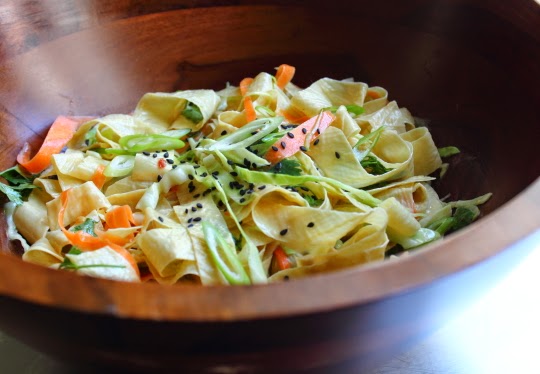
Yuba Noodle Salad – Do You Believe in Miracles?

So many things are touted as “miracle foods” these days, but invariably you find out the claims were false, the benefits exaggerated, and that Dr. Oz was full of crap again. I sure hope that doesn’t turn out to be the case with these grain-free, gluten-free, dairy-free, low-carb, low-cal, and quite delicious, yuba noodles.

You can use any dressings/garnishes you like, but I prefer these flavors, since texturally this closely resembles those wide, flat, Asian-style noodles we’ve all picked up from the neighborhood take-out place. Of course, those come loaded with massive amounts of bad carbs, a million calories, and enough MSG to choke a panda.

Occasionally, I have no problem with that, especially if I’ve been drinking, but generally this is a smarter option. Believe it or not, one giant portion of these noodles (not counting your dressing or sauce) only has 150 calories, just 7 grams of carbs, and almost no fat. So what’s the catch? It’s tofu.

But like pasta and noodles, tofu skin is very bland, so it’s really more about the texture, and being a “starchy” base for other ingredients, including non-vegan things like grilled chicken or shrimp. If you keep that in mind, I think you’ll really enjoy experimenting with this incredibly cool product. I hope you try this soon. Enjoy!


For 2 large portions Yuba Noodle Salad:
5 oz package yuba tofu skins, sliced into noodles
handful of carrot shavings
handful of thinly sliced cabbage
1/2 cup freshly torn cilantro leaves
1/4 sliced green onions
black sesame seeds

For the dressing (makes about 1 cup, about enough for 2 large salads):
2 tbsp smooth peanut butter
1 tbsp honey
1 tbsp fresh, finely grated ginger
1 tsp sambal chili sauce (or any hot ground chili sauce)
1/3 cup warm rice wine vinegar
1/2 cup vegetable oil
1 tsp soy sauce
1/2 tsp toasted sesame oil

Spaghetti Al Tonno – Nothing Fishy About This “Meat” Sauce

Spaghetti al tonno is one of my all-time favorite "go to" pasta dishes, and I hope this re-make of an old video helps make it one of yours. I did a very similar spaghetti with spicy tuna sauce for About.com a long time ago, but never got around to doing an official Food Wishes version.

Having said that, there really is no “official” recipe, as this is the type of dish that gets made a little differently every time. Not different on purpose, mind you, but different since that’s what happens when you cook without written recipes, which by the way, is the recommended method. 

I love a classic meat sauce as much as the next half-Italian, but when I want something quick and easy for a weeknight meal, I reach for the tuna. By the time you bring a pot of water to a boil, choose a wine, and cook your pasta, the sauce should be done. What if all that sounds great, but you don’t like fish? Then, this is perfect.

As I say in the video, the taste and texture is really closer to a veal sauce, than one made with fish. Above and beyond the non-fishy flavor, this is also lower in fat and calories, in case you’re into that kind of thing. So, the next time you’re in the mood for a quick spaghetti with “meat” sauce, I hope you give this delicious pasta sauce a try. Enjoy!


Ingredients for 4 Portions Spaghetti Al Tonno:
2 tbsp olive oil
1 anchovy filet
2 tablespoons capers
3 cloves minced garlic
1/2 cup white wine (Note: if you can’t use wine, don’t. Use a splash of stock)
3 cups crushed San Marzano tomatoes
red pepper flakes, to taste
1/4 tsp dried oregano
salt, pepper, and cayenne to taste
7 ounces oil-packed tuna, drained (reserve and use oil!)
1/4 cup chopped Italian parsley
12 ounces dry spaghetti
Parmigiano-Reggiano for top

That Other Meat Sauce

We did a classic Italian bolognese sauce not too long ago, which reminded me that I’ve actually never posted a basic, Italian-American meat sauce. This sauce goes by many names, including Sunday sauce, since that’s the day it’s traditionally made, but for me growing up, this was just called “sauce.”

This is one of those primal recipes that always follows the same procedure, yet almost never contains exactly the same ingredients. I was raised on a blend of beef, pork, and chicken, but any and all leftover proteins can, and must, be added to the pot.

Meatballs are a great choice; as are things like pigs feet, neck bones, and other similar cuts. The tougher the meat, the better it’s going to be in this sauce. Besides playing meat roulette, I’ll also switch different herbs like basil in and out, as well as include the occasional season vegetable.

You can also vary your results here with different tomato products. I went old-school and hand-crushed whole plums, but you can also use crushed or pureed tomatoes as well. The finer and smoother the tomatoes are processed, the thicker your sauce will be, so keep that in mind. Speaking of tomatoes; yes, it is much better to caramelize the tomato paste with the onions before you add the San Marzanos, but I didn't because Grandma didn't, and also, I forgot. 

As long as you cook the meat long enough, and season thoughtfully, there’s really no way this sauce isn’t going to be great. So, while you may not have grown up in an Italian-American home, with this comforting sauce simmering on the stove every Sunday, your family still can. I hope you give this a try soon. Enjoy!


Ingredients for 6 portions:
2 tbsp olive oil, divided
1 beef shank
2 pounds pork ribs
2 bone-in chicken thighs
1 diced onion
6 cloves garlic
3 (28-oz) cans San Marzano plum tomatoes, crushed or blended smooth
(Note - any canned tomato product will work. Try with pureed or already crushed tomatoes and save a step)
1/4 cup tomato paste
2 cups water, more as needed
2 tsp salt, or to taste
1 tsp black pepper
1/4 tsp red pepper flakes
2 tbsp chopped Italian parsley
1/4 cup freshly grated Parmigiano-Reggiano

That Other Meat Sauce

We did a classic Italian bolognese sauce not too long ago, which reminded me that I’ve actually never posted a basic, Italian-American meat sauce. This sauce goes by many names, including Sunday sauce, since that’s the day it’s traditionally made, but for me growing up, this was just called “sauce.”

This is one of those primal recipes that always follows the same procedure, yet almost never contains exactly the same ingredients. I was raised on a blend of beef, pork, and chicken, but any and all leftover proteins can, and must, be added to the pot.

Meatballs are a great choice; as are things like pigs feet, neck bones, and other similar cuts. The tougher the meat, the better it’s going to be in this sauce. Besides playing meat roulette, I’ll also switch different herbs like basil in and out, as well as include the occasional season vegetable.

You can also vary your results here with different tomato products. I went old-school and hand-crushed whole plums, but you can also use crushed or pureed tomatoes as well. The finer and smoother the tomatoes are processed, the thicker your sauce will be, so keep that in mind. Speaking of tomatoes; yes, it is much better to caramelize the tomato paste with the onions before you add the San Marzanos, but I didn't because Grandma didn't, and also, I forgot. 

As long as you cook the meat long enough, and season thoughtfully, there’s really no way this sauce isn’t going to be great. So, while you may not have grown up in an Italian-American home, with this comforting sauce simmering on the stove every Sunday, your family still can. I hope you give this a try soon. Enjoy!


Ingredients for 6 portions:
2 tbsp olive oil, divided
1 beef shank
2 pounds pork ribs
2 bone-in chicken thighs
1 diced onion
6 cloves garlic
3 (28-oz) cans San Marzano plum tomatoes, crushed or blended smooth
(Note - any canned tomato product will work. Try with pureed or already crushed tomatoes and save a step)
1/4 cup tomato paste
2 cups water, more as needed
2 tsp salt, or to taste
1 tsp black pepper
1/4 tsp red pepper flakes
2 tbsp chopped Italian parsley
1/4 cup freshly grated Parmigiano-Reggiano

Creamy Bay Scallop Spaghetti – An Almost Perfect Post-Holidays Pasta

After all those rich, complicated, and time-consuming holiday recipes, I’m always craving something light, fast, and easy; and this creamy bay scallop spaghetti is all that and more. Literally “more,” in that this is not light, but quite delicious, and in roughly the time it takes you to boil spaghetti, the sauce should be just about ready.

With some similar recipes to this, the chef will have you remove the scallops as soon as they’re seared, to be added back right at the end. Sounds smart since these little mollusks only take a few minutes to cook, but I think it’s a mistake. Yes, the scallops will be smaller and firmer using my method, but the trade-off is a much more flavorful sauce.

Sometimes cooks are so afraid to overcook and ruin something, they never extract as much flavor as possible. Sure, if you boiled these bay scallops another ten minutes or so, they’d get start getting dry and rubbery, but here they’re still plenty tender and moist enough, and I think you’ll agree the sherry sauce benefits significantly.

Regarding the sherry wine: If you can’t have or don’t want to use it, you’re on your own with replacements. While this would probably still work with none, or any number of sort-of-sweet, sort-of-acidic substations, I make mine with sherry, so I can’t tell you what will happen if you stray.

The meat’s another story. Feel free to switch out the scallops with any cubed protein, so really, if you think about it, I just shoed you like a dozen new recipes. You’re welcome! I really hope you give this a try soon. Enjoy!


Ingredients for 4 appetizer-sized portions:
1 tbsp vegetable oil
1 pound bay scallops
2 tbsp butter
3 cloves garlic, minced
2 tsp lemon zest
pinch red pepper flakes
1/3 cup sherry wine
1 cup heavy cream
salt and pepper to taste
juice of 1 lemon or to taste
8 oz cooked thick spaghetti
2 tbsp Italian parsley, divided
Parmigiano-Reggiano to taste

Creamy Salmon and Leek Pasta Sauce and Obvious Metaphors

-->It feels like we’ve been swimming up river the last few days, as our small, but traumatic kitchen remodel takes place. I’m sure the project will come in well under budget, and way ahead of schedule, but for now, everything takes twice as long to do.

Happily, wanting to keep things simple is what spawned this very tasty salmon and leek pasta sauce. This recipe features two of my favorite foods; wild salmon and crème fraiche.

These types of seafood sauces are usually made with straight cream, or a béchamel, but I find those fall a little flat when compared to the tangy, fermented goodness of homemade sour cream. While it has the same fat content as cream, it just seems so much lighter and complex.

I’ll assume you’ve seen our winning “how to make your own crème fraiche” video, but if not, I highly suggest you do! Homemade crème fraiche will change your life. Check it out, and enjoy!


Ingredients for 2 Portions:
1 tbsp butter
1 large leek, diced, washed thoroughly
salt to taste
1/2 cup white wine
juice from 1/2 lemon
1 cup creme fraiche (you can use all or part cream)
cayenne to taste
1 tsp tarragon Dijon (or regular Dijon)
6 oz boneless skinless salmon, sliced thin (yes, this will work with any other fish, poultry, or meat!)
Cooked pasta for 2!

View the complete recipe

Only An April Fool Wouldn’t Try This Pasta Primavera

Every once in a while I get an urge to remind you about some previously posted, seasonally appropriate video recipe. Today, it was seeing an old photo of our pasta primavera that inspired my need to re-feed.

Many of our fresher (greener?) viewers may not have seen this classic springtime pasta before, and if that’s the case, run, don’t walk, to the nearest farmer’s market, fill a basket with fresh green veggies, and get cooking. You can click here to read the original blog post, and get all the ingredient amounts. Enjoy!

Only An April Fool Wouldn’t Try This Pasta Primavera

Every once in a while I get an urge to remind you about some previously posted, seasonally appropriate video recipe. Today, it was seeing an old photo of our pasta primavera that inspired my need to re-feed.

Many of our fresher (greener?) viewers may not have seen this classic springtime pasta before, and if that’s the case, run, don’t walk, to the nearest farmer’s market, fill a basket with fresh green veggies, and get cooking. You can click here to read the original blog post, and get all the ingredient amounts. Enjoy!

Broken Spaghetti “Risotto” – There’s a Good Reason for Those Quotation Marks

This broken spaghetti “risotto” is many things – a fun-to-make recipe; a visually unique pasta dish; and a great alternative to the same old starchy side dishes – but one thing it’s not, is a risotto. No rice was harmed in the making of this video.

The “risotto” refers to the similar technique used for that famous Italian dish. Like the grains of Arborio rice, the pieces of broken pasta are tossed in hot butter or oil before the liquid is added, but here we’re going even further, and toasting it to a gorgeous nut-brown.

This gives the dish its signature look, as well as adds a subtle nutty/toasty flavor. The rest of the process is similar to risotto as well, with the broth being added in increments, to be absorbed by the noodles before the next splash is added.

The broth amounts below should be very close to what you’ll need, but as I said in the video, depending on the pan, heat, and size of batch, you’ll have to simply adjust on the fly.

As long as you don’t walk away, you should be fine. Just keep stirring until the liquid is almost gone, then taste, and if the pasta is cooked, you’re done. If it needs more, add a little broth and keep going.

I did this as a simple side dish, but if you added some vegetables and shredded chicken, you’d be looking at quite an impressive main course. In fact, don’t be surprised if you see this dish re-imagined here in the future. In the meantime, I hope you give this a try soon. Enjoy!


Ingredients for 2 small portions:
1 tbsp olive oil
1 cup cut spaghetti, or regular spaghetti broken into very small pieces
2 cloves garlic, finely minced
about 1 1/2 cups hot chicken broth or stock, as needed
salt and chili flakes to taste
1 tbsp chopped fresh Italian parsley
2 tbsp Romano or Parmigiano-Reggiano cheese, or to taste

View the complete recipe

Classic Chicken Noodle Soup – Thank Goodness We Had Roasted Chicken Broth Around!

In case you haven’t been following along, let me catch you up. On Wednesday we made a gorgeous roasted chicken broth for the expressed purpose of making this soul-warming soup. Here, we used that wonderfully flavorful broth to complete the recipe, and let me tell you, it was incredible.

You know how much I hate to complicate a recipe, and I'll always err on the side of too few ingredients vs. too many, so when I make this chicken noodle soup it’s a constant battle to not add other “stuff.”

Not that’s there’s anything wrong with stuff, per se, but if properly made, this soup is just too amazing in its pure and natural state for any distracting, supercilious additions. By the way, a little advice to you young up-and-coming food bloggers; never use “per se,” and “supercilious” in the same sentence.

Yes, other than the mirepoix, and a tiny pinch of fresh thyme, the rest of this soup is basically chicken and noodles. Speaking of the noodles, I’m hoping you go with the wide ones I used. I was only half-kidding about this soup being a meditation, and egg noodle wrestling is half the fun.

Like I said in the video, this will work with regular chicken stock, but if you do decide to make this, I sincerely hope you go ahead and make the roasted chicken broth first. Enjoy!


Ingredients for 4-6 servings:
1 tbsp melted butter
1 tbsp rendered chicken fat
1/2 cup diced carrot
1/2 cup diced onion
1/2 cup diced celery
1/4 tsp fresh thyme leaves or pinch of dried thyme
1 pound cooked chicken breast, cubed
4 oz dry wide egg noodles
cayenne, salt and black pepper to taste